
Picture a company drill. A firefighter moves ahead before the backup line is in position. The evolution is stopped, the crew resets, and everyone returns to the station. You know the decision needs to be discussed. But you also know this firefighter takes pride in their work, and you don’t want a direct conversation to damage the trust you’ve built.
So you wait for a better moment. Then another shift passes.
In the fire service, avoiding feedback doesn’t make the issue safer. It leaves the behavior unaddressed and gives assumptions room to grow. The answer isn’t to soften the standard or deliver a sharper reprimand. It’s to describe what happened, explain the impact, and ask what the person intended.
That’s the SBI+Intent framework: Situation, Behavior, Impact, and Intent. It helps you be clear about accountability while staying curious about the person behind the behavior.
Why intent belongs in the conversation
Two things can be true at once: someone’s actions had a negative impact, and they may not have intended that impact.
When you skip the intent question, it’s easy to fill in the blank yourself: They don’t respect the chain of command. They’re careless. They just want attention. Those conclusions may feel convincing, but they’re interpretations, not facts.
The Center for Creative Leadership’s SBI framework adds an inquiry about intent to the familiar steps of Situation, Behavior, and Impact. The point isn’t to excuse a behavior or guess at someone’s motives. It’s to invite their perspective before deciding what the situation means.
That distinction matters in a close-knit crew. Feedback that focuses on what a person did gives them something specific to consider. Feedback that labels who they are can make them defend their character instead.
A useful reminder: impact calls for attention; intent calls for a question. Neither one erases the other.
Use SBI+Intent: four steps to clear feedback
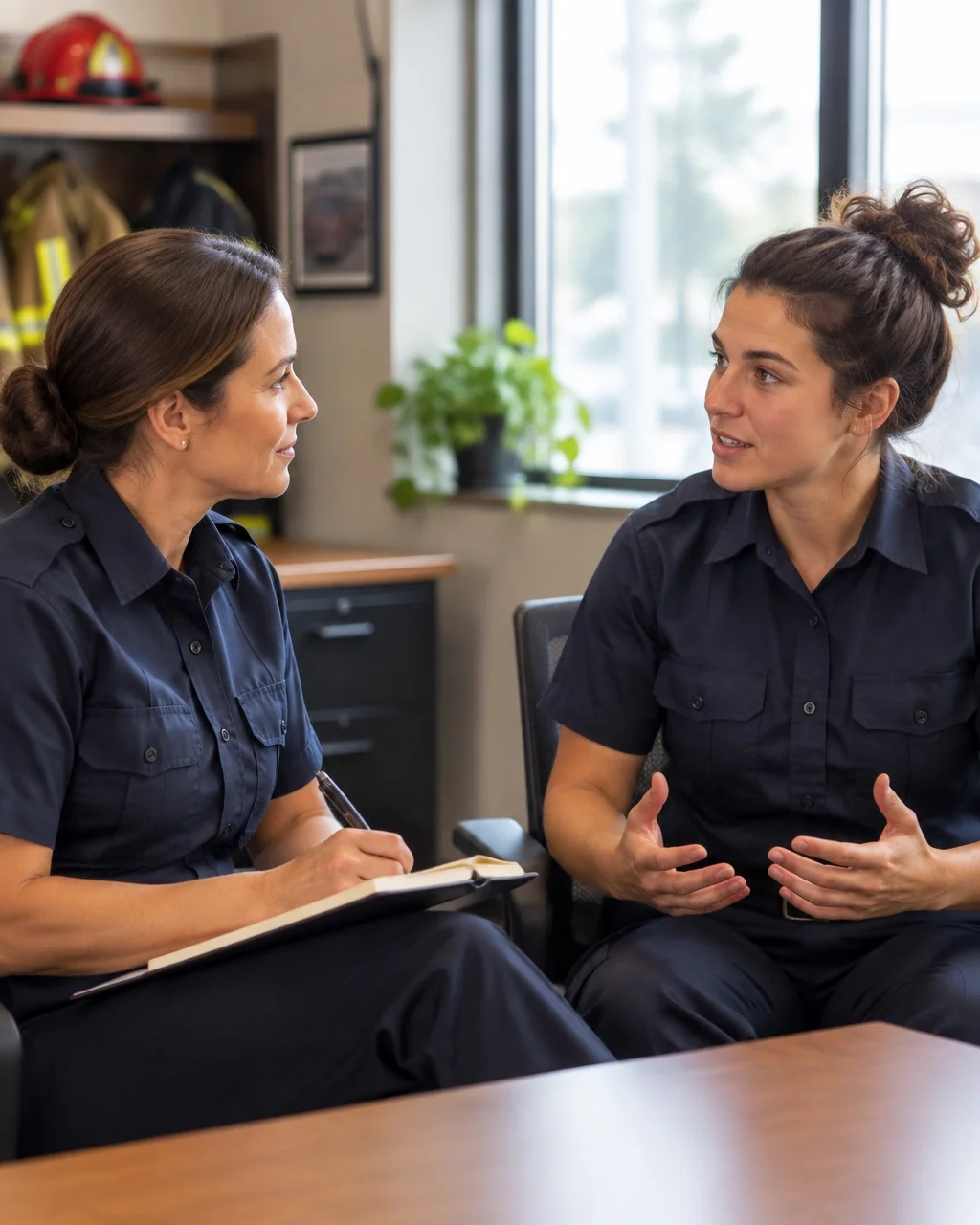
1. Situation: Name when and where
Be specific enough that you’re both talking about the same moment. Avoid broad openings like “You always…” or “This keeps happening.”
Try:
“During Tuesday’s morning apparatus check…”
“At yesterday’s training evolution…”
A clear situation sets the conversation on firm ground. You’re not reviewing someone’s entire character or career; you’re discussing a particular event.
2. Behavior: Describe what you observed
Say what the person did or said, without turning your observation into a judgment.
Instead of “You were careless,” try:
“You marked the check complete before the tools in the rear compartment had been verified.”
Instead of “You were disrespectful,” try:
“During the briefing, you spoke over the officer giving the assignment before she had finished.”
If a camera could have recorded it, you’re more likely to be describing behavior. If your wording assumes a motive or labels a personality, slow down and try again.
3. Impact: Explain why it matters
Make the consequence clear. Connect the behavior to safety, communication, readiness, trust, or the crew’s ability to do the work.
“That meant the crew couldn’t rely on the check to confirm the compartment was ready.”
“The interruption made it harder for the team to hear the full assignment and ask questions.”
Be proportionate. Don’t inflate a concern to make it sound important. A specific, honest impact is stronger than a dramatic accusation.
4. Intent: Invite their perspective
Now ask what they were trying to accomplish. Then give the person time to answer.
“What was going on for you in that moment?”
“What were you hoping would happen?”
“What did you see that led you to step in?”
You may learn that the firefighter thought a tool had already been checked, felt pressed for time, or was trying to alert the crew to a hazard. That context doesn’t automatically make the behavior acceptable. It does help you choose a response that addresses what actually happened, not a story you built in your head.
A station-level example you can use
Suppose a firefighter has repeatedly interrupted a female officer during shift briefings. You could say:
“At this morning’s briefing, while Captain Rivera was assigning the training roles, you interrupted twice before she had finished. That made it difficult for the crew to hear the complete plan and left the discussion unsettled. What were you hoping to accomplish by jumping in?”
Then listen. If the firefighter says they were concerned about a safety detail, recognize the concern and clarify how to raise it without cutting off the briefing:
“I’m glad you raised the safety issue. Next time, hold up a hand or say, ‘I have a safety concern,’ so we can pause and hear it. We also need to let the officer finish the assignment. Can we agree on that?”
That response keeps both responsibilities in view: people should be able to raise a concern, and the crew needs clear, orderly communication.

Direct command in the moment; coaching after
Feedback doesn’t always begin with a calm conversation. When an immediate safety risk needs correction, give a clear direction first. You might say, “Stop the evolution. Reset the backup line before the next entry.” In a time-critical situation, the priority is safe, unambiguous action, not a four-part coaching discussion.
After the scene or drill is stable, return to the behavior and debrief it. This difference helps your crew understand that urgency calls for direction, while learning and accountability deserve a fuller conversation.
The same principle applies to how you receive feedback. If someone raises a concern about your own impact, try:
“Thanks for telling me. What did you see or hear that led to that?”
Listening doesn’t require you to agree with every interpretation. It shows that speaking up will be taken seriously.
Researchers studying teams describe psychological safety as a shared belief that it’s possible to take interpersonal risks, such as asking a question or raising a concern. It isn’t permission to ignore standards. It helps people discuss what they need to meet them. Amy Edmondson’s foundational work on psychological safety in work teams offers useful context for leaders building that kind of learning environment.
Common ways feedback goes off course
Before you sit down with someone, check your approach:
Don’t use “always” or “never.” One specific example is easier to discuss than a sweeping charge.
Don’t bury the message under a long preamble. Be respectful and get to the point.
Don’t ask about intent as a trap. If you’ve already decided the answer, it isn’t a real question.
Don’t let intent erase impact. A good reason for acting doesn’t mean the effect can be ignored.
Don’t end without a next step. Agree on what should happen differently and when you’ll check in.
Feedback is a leadership skill, not a test of whether you’re naturally comfortable with conflict. The goal isn’t to make every conversation painless. It’s to make it fair, useful, and clear enough that both people know what happens next.
Put the framework into practice
Before your next feedback conversation:
Write down the specific situation and the observable behavior. Remove labels and assumptions about motive.
Identify the real impact. Ask yourself: What did this affect, safety, readiness, communication, trust, or something else?
Prepare one genuine question about intent. Be ready to listen without abandoning the standard.
Decide what a useful next step would look like. Make it specific enough that you can follow up.
Then ask yourself: What feedback conversation are you postponing because you fear the relationship won’t survive it? What might change if you approached it with clarity and curiosity instead of silence or accusation?
SBI+Intent won’t guarantee agreement, and it won’t resolve every complex personnel issue. It gives you a steady way to open the conversation: name what happened, explain why it matters, and make room for missing information. That’s how you hold the line on standards without turning the person into the problem.
For more support with challenging conversations, read Mastering Difficult Conversations in the Fire Service or explore Marian Coaching. A focused coaching conversation can help you prepare the words, practice the approach, and move forward with confidence.
