
Leading the Generation That Learns Differently: What Young Firefighters Really Need From Their Leaders
At 02:00, the tones drop for a working structure fire. Your crew moves quickly, but one of your newer firefighters hesitates before committing to the assignment. Later, during the debrief, you learn why: they were unsure about the tactical decision and did not feel comfortable asking for clarification.
Was that a lack of courage? A lack of resilience? Or was it a leadership signal you missed before the call?
In my experience working with fire service leaders, the answer is often the third one.
This is the next conversation after “Growing Pains: How to Protect Your Fire Department Culture While Rapidly Hiring New Staff”. Rapid hiring may get people through the door, but it does not automatically teach them how to belong, perform, communicate, or grow within your department.
Once you hire younger firefighters, the real leadership work begins.
They Do Not Want Lower Standards. They Want Clearer Leadership.
I have heard the complaints:
“They question everything.”
“They want to know why.”
“They need too much validation.”
“They are not as tough as we were.”
“They do not respect the chain of command.”
Sometimes those observations reflect real performance or conduct problems. But often, they reflect a mismatch between the leadership style being used and the way newer firefighters have learned to process information.
That distinction matters.
Young firefighters do not necessarily want you to lower the standard. They want to understand the standard, how to reach it, and whether you are invested in helping them get there.
A 2024 National Fire Academy study of 15 Generation Z firefighters found that:
87% wanted more hands-on skills training.
87% wanted training to strengthen areas of development.
60% wanted encouragement and feedback on performance.
67% said poor leadership could cause them to leave their department.
93% said feeling welcomed helped them feel part of the team.
That is not a request to avoid accountability. It is a request for connection, clarity, and development.
The question I would ask you is this: Are you interpreting a desire to learn as a refusal to follow?

What “Learning Differently” Really Means
When I say younger firefighters learn differently, I am not saying every Millennial or Gen Z firefighter fits the same profile. Generational labels can be useful for noticing broad trends, but they should never replace getting to know the individual in front of you.
In general, however, many younger firefighters expect four things from leaders.
1. Coaching conversations instead of lectures
A lecture communicates information. Coaching develops judgment.
A lecture might sound like:
> “You should already know this. We have covered it before.”
A coaching conversation sounds more like:
> “Walk me through what you saw, what decision you made, and what you would do differently next time.”
The second approach does not remove accountability. It makes the firefighter participate in the learning process.
2. The “why” behind the order
In an emergency, you may not have time to explain every decision. A clear order must be followed immediately.
But outside the moment of urgency, explaining the reasoning behind an order builds better decision-makers.
Try saying:
> “I need you to complete this search pattern because it gives us the best chance of covering the primary areas quickly and communicating what has been cleared.”
Or:
> “We are drilling this evolution again because speed without communication creates risk for the entire crew.”
You are not weakening your authority by explaining the why. You are building understanding that can hold when conditions change.
3. Authenticity and connection
Younger firefighters are watching whether your stated values match your daily behavior.
If you talk about teamwork but isolate probationary firefighters, they notice. If you talk about wellness but ridicule someone for asking for help, they notice. If you say questions are welcome but become defensive whenever someone asks one, they notice.
Connection does not mean becoming everyone’s friend. It means being present, consistent, and human.
A simple question can carry more leadership weight than you realize:
> “How are you doing with the transition into this station, and what support would help you perform at your best?”
4. Frequent feedback
The annual performance review is too slow to guide a new firefighter through a demanding learning curve.
Younger members often expect feedback in smaller, more frequent intervals. That does not mean they need praise every five minutes. It means they want to know where they stand before a small problem becomes a formal performance issue.
A two-minute conversation after a drill can be enough:
> “Your equipment check was thorough, and you communicated well with your partner. The next area I want you to work on is slowing down during the size-up so you can identify the bigger picture.”
That feedback is timely, specific, and behavioral. The firefighter knows what to repeat and what to change.
Reframe the Friction Points
Every generation has tested the patience of the generation before it. The fire service is not unique in that regard.
The leadership opportunity is to translate frustration into useful information.
When they ask “why” too much
Do not automatically treat the question as disrespect. First, determine what is underneath it.
Are they challenging your authority? Or are they trying to understand the decision well enough to execute it correctly?
You can set a respectful boundary while still answering:
> “That is a fair question. Right now, I need you to follow the direction. After the evolution, I will explain the reasoning and hear your concerns.”
You preserve command presence while keeping the learning door open.
When they seem to need constant validation
A new firefighter may not be asking you to tell them they are exceptional. They may be trying to determine whether they are progressing safely.
Replace vague reassurance with clear information:
> “You are meeting the standard on hose handling. Your communication still needs work during transitions. Let’s practice that twice today, and I will check your progress at the end of the shift.”
Specificity reduces anxiety better than empty praise.
When they appear less resilient
Resilience is not created by withholding support. It is built through challenge, recovery, reflection, and continued practice.
If someone struggles during a drill, do not rescue them from every uncomfortable moment. Stay engaged while requiring them to improve:
> “This was a difficult evolution, and you are not where you need to be yet. We are going to identify the breakdown, practice the skill, and run it again.”
That message says, “I believe you can improve, and I will not let you avoid the work.”
Use Emotional Intelligence to Lead the Person in Front of You
Generational leadership is also emotional intelligence in action. I use four EQ capacities to help leaders manage these moments.
1. Self-awareness: Check your assumptions
Before labeling a firefighter as entitled, fragile, or disrespectful, ask yourself:
What specific behavior am I reacting to?
Am I judging this person by today’s standard or by my own experience?
What story am I telling myself about their intentions?
Your assumption may be correct. But you owe it to your crew to test it before acting on it.
2. Self-management: Regulate your frustration
A question asked at the wrong time can irritate you. A defensive response from a younger member can push your buttons.
Take one breath before answering. Lower your volume. Separate the immediate operational need from the later coaching need.
Your emotional regulation becomes part of the training environment. If you respond to every question with anger, you teach people to stay silent.
3. Social awareness: Understand what motivates them
The National Fire Academy study found that younger firefighters valued family atmosphere, belonging, hands-on training, career advancement, education, and feedback.
That does not mean every firefighter wants promotion. It does mean you should learn what matters to each person.
Ask:
> “What do you want to become more capable of over the next six months?”
Then connect available training, assignments, and mentorship to that goal.
4. Relationship management: Give feedback that lands
Feedback is not effective merely because you delivered it. It is effective when the other person understands it and can act on it.
Use this structure:
Describe the behavior.
Explain the impact.
State the expected behavior.
Agree on the next practice opportunity.
For example:
> “During the drill, you moved before confirming your assignment. That created confusion for the crew. Next time, stop, acknowledge the assignment, and communicate your movement. We will practice that again on the next evolution.”
No insult. No vague criticism. No attack on character. Just a clear path forward.
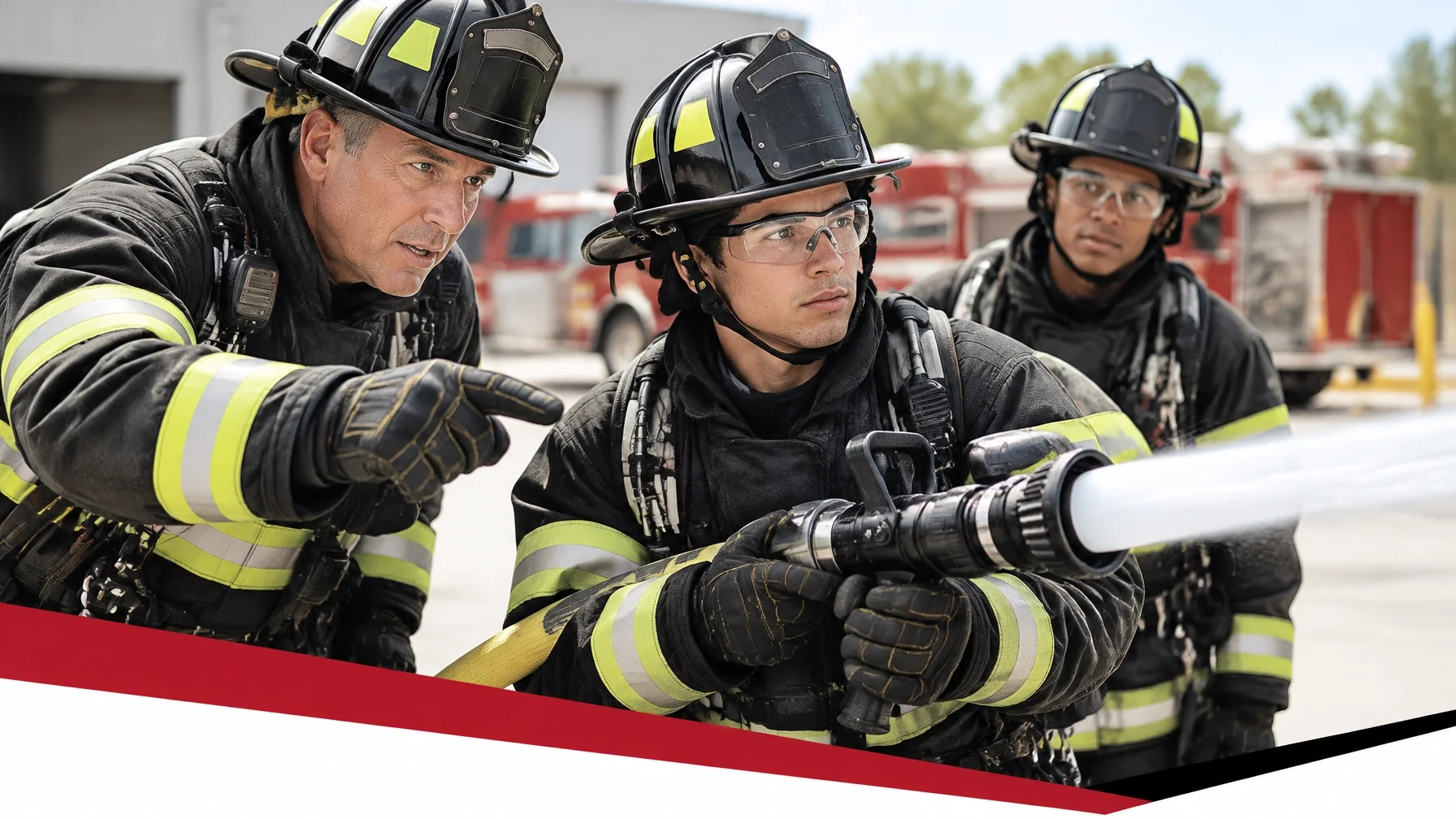
A Practical Leadership Rhythm for Your Shift
You do not need to create a complicated new program to lead younger firefighters more effectively. Start with a repeatable rhythm.
At the beginning of the shift
Set expectations clearly:
What are today’s priorities?
What standard matters most?
What training or development opportunity is available?
What does success look like?
Try:
> “Today we are focusing on communication during our hands-on evolutions. I want everyone to leave the drill knowing exactly what they did well and what they need to sharpen.”
During the shift
Use short check-ins instead of waiting for a formal meeting.
Ask:
> “What is clear?”
> “Where do you need more practice?”
> “What question has not been answered yet?”
After a call or drill
Hold a brief after-action conversation:
What went well?
What was difficult?
What did we learn?
What will we do differently next time?
Make sure you also catch people doing things right:
> “I noticed you helped your partner reset without being asked. That is the kind of crew awareness we need.”
Recognition is not indulgence. It is reinforcement.
At least monthly
Have a more intentional development conversation. Discuss:
Current performance
Training goals
Career interests
Obstacles
Support needed
One measurable next step
The purpose is not to promise promotion. The purpose is to make development visible and attainable.
Hold the Standard. Adapt Your Style.
There is a false choice in leadership: either you maintain high standards or you become approachable.
You can do both.
The standard is the standard. Firefighters must be competent, dependable, physically and mentally prepared, and capable of functioning as part of a team. But the way you teach, correct, and develop them can change.
Think of it this way: You do not change the mission because the crew learns differently. You change the route you use to get them ready for the mission.
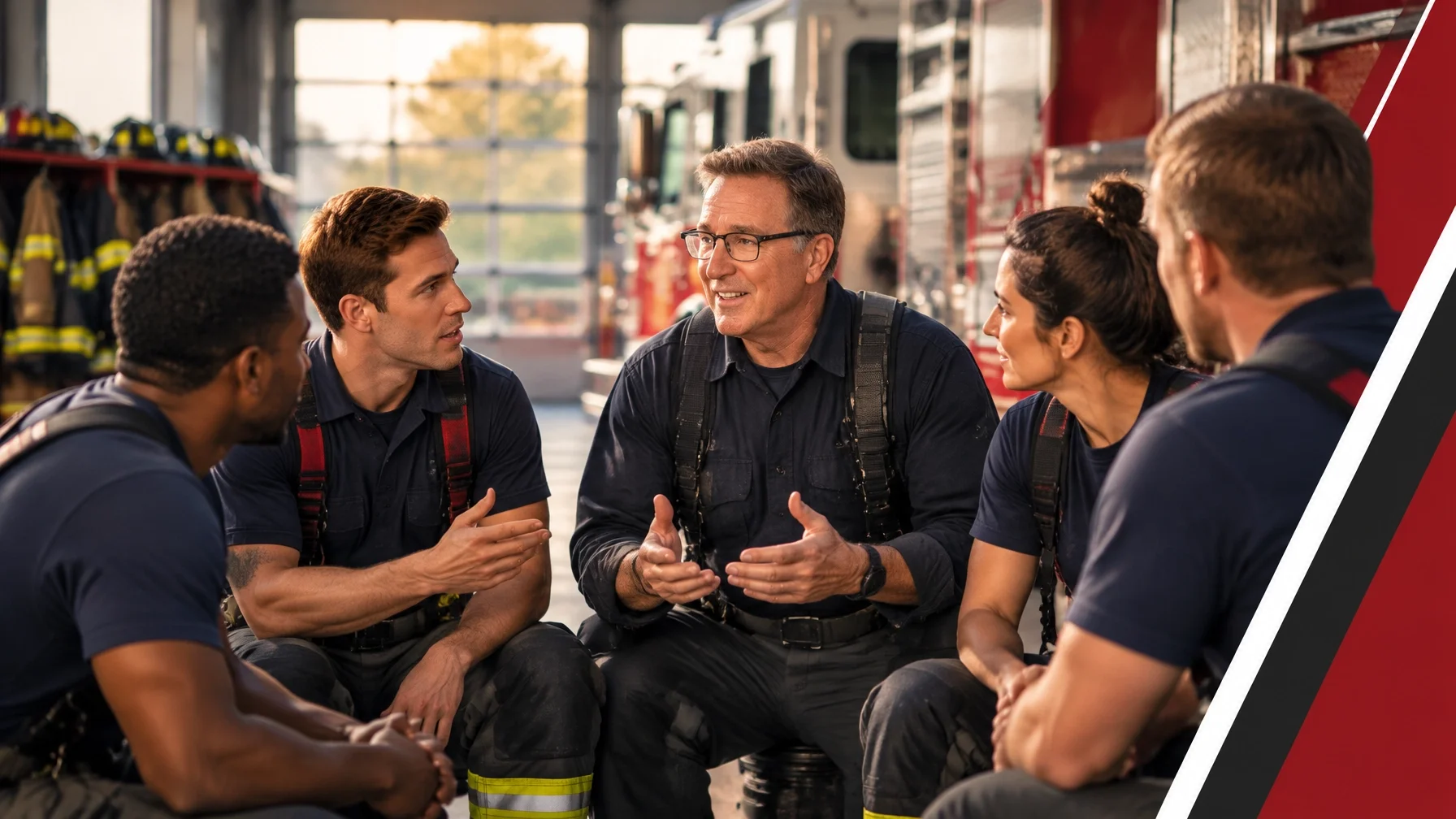
Your younger firefighters bring energy, technology skills, adaptability, and a desire to contribute. Your experienced members bring judgment, institutional knowledge, and hard-earned perspective. Your job as a leader is to create the conditions where those strengths reinforce each other instead of competing.
That is how you turn rapid hiring into a long-term operational advantage.
Questions for Reflection
Take a few minutes to consider:
When a younger firefighter asks “why,” do I hear engagement or disrespect?
How often do my firefighters receive specific feedback from me?
Do my actions communicate that questions and learning are welcome?
What assumptions am I making about Millennials or Gen Z?
Can every member of my crew explain how their daily work connects to the department’s mission?
Which firefighter on my shift may need more connection, clarity, or coaching from me?
Two Action Steps for This Week
Schedule one 15-minute development check-in with a younger firefighter. Ask what they want to improve, what support they need, and what one next step you can agree on.
Replace one correction with a coaching conversation. Describe the behavior, explain its impact, clarify the standard, and give the firefighter a chance to practice again.
If you want to strengthen your officers’ ability to lead across generations, build trust, and have feedback conversations that improve performance, explore Marian Coaching’s leadership development resources. You can also review “The Burning Truth: Why Emotional Intelligence Is a Fire Service Leader’s Most Powerful Tool” or contact me directly to discuss coaching for your department.
The next generation is already in your stations. The question is not whether they will learn differently.
The question is whether you are willing to lead differently enough to help them become the firefighters your community needs.
