Not Every Rule Breaker Deserves the Same Punishment: A Fire Service Guide to Discipline with Discernment
At 2:00 a.m., your crew is returning from a difficult call. The apparatus operator notices that a required inspection step was skipped before leaving the station. No one was injured. The apparatus performed normally. The report is already being completed.
What do you do?
Do you immediately issue discipline? Do you gather the crew and remind them that rules are rules? Or do you first ask why the step was missed?
Your answer matters because the same violation can come from very different places: selfishness, pressure, a desire to help, or a sincere belief that the rule no longer protects the people it was designed to serve.
I recently read Michael J. Gill’s Harvard Business Review article, “How the Best Leaders Respond to Rule Breaking”. Drawing on more than 250 studies, Gill makes a point that every fire service leader should consider:
Not all rule breaking is the same, so not every rule breaker should receive the same response.
That does not mean you let people off the hook. It means you learn to distinguish a bad decision from a bad system: and a bad actor from a firefighter caught in a bad situation.
Discipline is not the same as punishment
In the fire service, discipline is necessary. Standards protect crews, citizens, and the integrity of the department. When someone falsifies a training record, ignores a safety procedure for personal convenience, or deliberately conceals a mistake, leaders must respond.
But punishment alone is not leadership.
If your only response is to identify the person who broke the rule and impose a consequence, you may close the case without addressing the cause. The same problem may appear on another shift, in another station, or under another supervisor.
A disciplined leader asks two questions before deciding what should happen:
Was the behavior constructive or destructive?
Was it driven primarily by individual choice or situational pressure?
Those two questions create four categories of rule breaking.
The four types of rule breaking in the fire service

1. Self-interested rule breaking: choice plus destruction
This is the clearest form of misconduct. A person knowingly breaks a rule for personal benefit, while creating harm or risk for others.
In a fire department, examples might include:
Falsifying training or inspection records
Claiming overtime that was not worked
Using department resources for personal gain
Ignoring a required safety procedure because it is inconvenient
Concealing an error to protect a reputation or promotion opportunity
The key issue is not simply that a rule was broken. The issue is that the person made a self-serving choice and understood: or should have understood: the destructive consequences.
This behavior requires accountability. You may need formal discipline, closer oversight, retraining, or a performance improvement plan.
But even here, you still need facts. Before you label someone dishonest, confirm what actually happened.
You might say:
“I want to understand the sequence of events before we discuss consequences. Walk me through what you did, what you knew at the time, and what you believed would happen.”
Curiosity does not weaken accountability. It strengthens the accuracy of your response.
2. Corrupted rule breaking: pressure plus destruction
Now consider a firefighter who skips equipment testing because the crew is under pressure to meet a deadline, or a company officer who signs off on incomplete work because staffing shortages have made the normal process nearly impossible.
The outcome may still be destructive. The rule was broken, and the department may have been exposed to risk. But the violation was influenced by the situation.
This is what Gill describes as corrupted rule breaking: pressure, incentives, culture, or leadership signals push people toward harmful conduct.
Ask yourself:
Have we created an expectation that speed matters more than verification?
Are supervisors rewarded for avoiding delays at any cost?
Does a staffing problem make compliance unrealistic?
Have people been told to “get it done” without being given the resources to do it correctly?
Is the written policy different from how work actually gets done?
If you punish only the individual, you may be treating a symptom while leaving the pressure intact.
The correct response may include discipline, but it should also include a system review. Otherwise, your department may create the next violation before the current one is even forgotten.
3. Prosocial rule breaking: choice plus construction
Firefighters regularly encounter policies that do not fit the human situation in front of them.
A crew may bend a process to help a vulnerable citizen. A Captain may use discretion to support a member experiencing a family emergency. A firefighter may take an unconventional step to solve a problem quickly and protect a colleague.
The person is making a choice, but the intent is constructive. They are trying to help someone: not enrich themselves or avoid responsibility.
That does not mean every well-intended violation is acceptable. Good intentions can still produce harmful outcomes. A shortcut taken to help a citizen could create a safety, legal, or liability problem.
The leadership task is to separate the intent from the impact.
You might say:
“I can see that you were trying to help. I also need us to examine the risk your decision created. Both things can be true: your intent was positive, and the impact may still require correction.”
This conversation gives you an opportunity to improve the policy. If multiple people are bending the same rule for the same constructive reason, perhaps the rule is too rigid, outdated, or disconnected from operational reality.
A policy that repeatedly forces good people to choose between compliance and service is sending you feedback.
4. Edified rule breaking: pressure plus construction
The fourth category is especially important in emergency services.
An edified rule violation occurs when a person feels situational pressure to break a rule because they believe doing so is morally or professionally right.
Imagine an outdated procedure that conflicts with an immediate life-safety need. A firefighter may ignore the procedure to protect a victim or crew member. The decision may violate the written policy, but the person believes a higher duty: preserving life and preventing harm: requires action.
Again, the outcome may be constructive, but that does not eliminate the need for review.
You still need to ask:
Was the danger real and immediate?
Were reasonable alternatives available?
Did the person communicate the decision?
Was the policy genuinely outdated?
Could the same decision create unacceptable risk in another circumstance?
Your response might sound like this:
“Tell me what you saw, what options you considered, and why you believed this action was necessary. We will evaluate the decision carefully, and if the policy no longer fits the hazard, we will address that too.”
That is not permissiveness. It is professional discernment.
Intent matters: but impact matters too
As a leader, you must resist two common errors.
The first is assuming that harmful results prove harmful intent. A new Captain can make a poor decision while trying to protect the crew. A good person can make a dangerous mistake.
The second is allowing good intent to excuse every outcome. “I was only trying to help” cannot become a shield against responsibility.
Your job is to examine both sides:
Intent: What was the person trying to accomplish?
Impact: What actually happened or could have happened?
Choice: How much control did the person have?
Pressure: What demands, expectations, or conditions shaped the decision?
Pattern: Is this an isolated event or a repeated behavior?
This is where emotional intelligence becomes operational, not theoretical. Your ability to regulate your own reaction, listen carefully, and ask precise questions can determine whether you discover the truth: or merely confirm your first assumption.
Look for patterns across the department
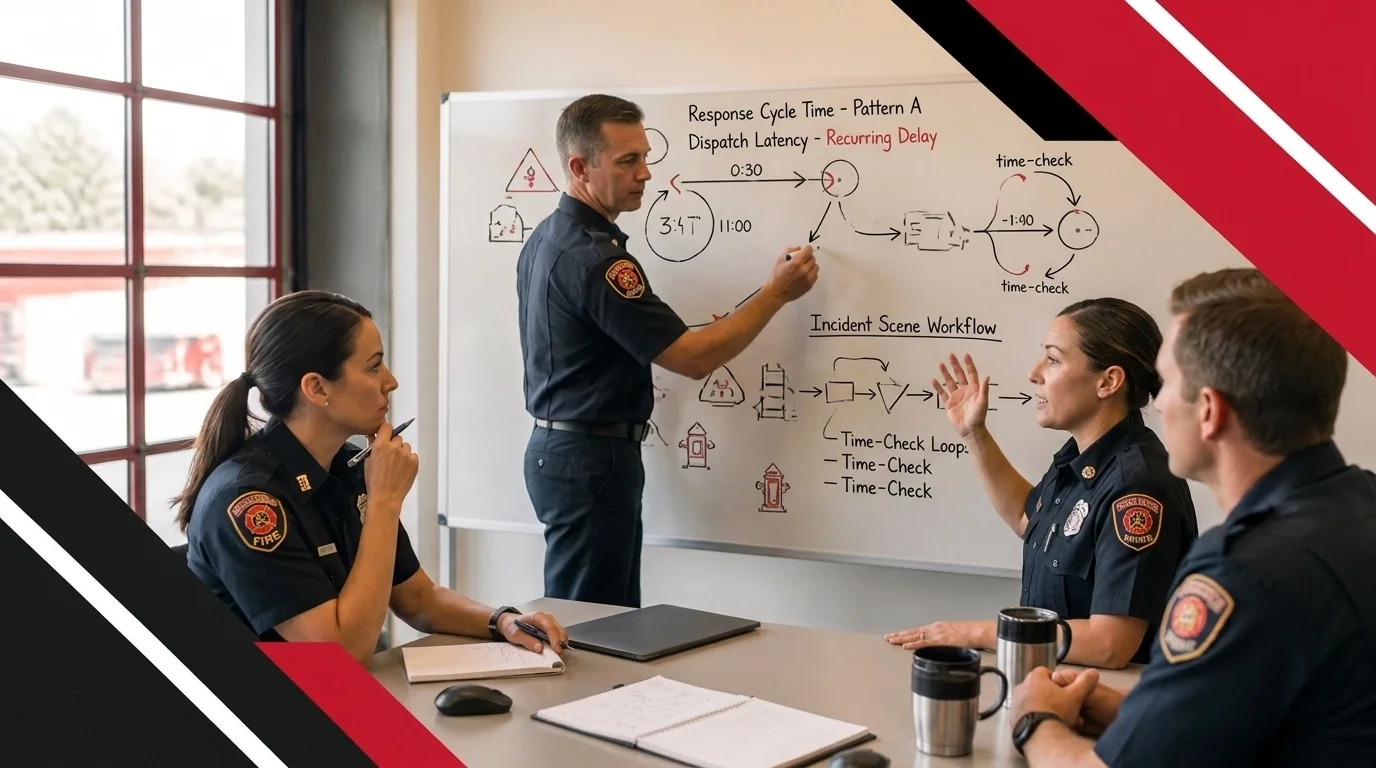
One missed inspection may be an individual mistake. Five missed inspections across three shifts may be a system problem.
Repeated violations are data.
They may reveal:
Confusing or contradictory policies
Insufficient training
Inadequate staffing
Unrealistic response expectations
Poor handoff procedures
Weak supervision
Incentives that reward speed over quality
A culture where reporting problems is viewed as disloyal
If the same rule is being broken by people who do not work together, you should become suspicious of the system before assuming the department has developed several unrelated “bad apples.”
Ask your command staff:
“Where else might this be happening?”
Then ask the harder question:
“What are people not telling us because they believe the truth will be punished?”
Create ways to hear the truth
A department cannot correct what leaders never see.
You need formal and informal ways to uncover hidden rule breaking, near misses, and impractical procedures. Consider:
Anonymous reporting channels
Regular after-action reviews
Station visits without an agenda
Near-miss reporting that focuses on learning
Small-group listening sessions
Questions during shift briefings such as, “What policy is hardest to follow in real operations, and why?”
Reviewing how work is actually performed: not only how it is described in a policy manual
Psychological safety does not mean the absence of standards. It means people can raise concerns, admit mistakes, and report risks before they become tragedies.
I have written more about this in “Why Psychological Safety Is the Ultimate Foundation for Accountability in the Fire Service”.
If your members only tell you what they think you want to hear, you are not leading with full information. You are operating with a blindfold.
A practical framework for discipline with discernment
When a rule is broken, I recommend this five-step approach:
Stabilize the immediate risk.
Protect people, preserve evidence, and stop the unsafe behavior.Gather the complete story.
Speak with the people involved individually when appropriate. Ask open questions before making accusations.Classify the behavior.
Was it self-interested, corrupted, prosocial, or edified? Was it constructive or destructive? Was it choice or pressure?Match the response.
Use appropriate consequences for intentional misconduct. Use coaching, retraining, policy clarification, or system repair when the context calls for it.Follow up for patterns.
Review whether the same issue exists elsewhere and communicate what changed as a result of the review.
If the conduct was deliberate, self-serving, and destructive, be clear and firm. If the conduct exposed a broken process, repair the process. If the person acted with a constructive intent but poor judgment, hold the standard while developing the judgment.
That is how you keep accountability from becoming a blunt instrument.
Questions for reflection
Take these questions to your next command staff meeting or one-on-one coaching conversation:
When someone breaks a rule, do I seek understanding before assigning motive?
Do members of my department feel safe telling me when a policy is impractical?
Which rules are repeatedly bent, and what might that pattern be telling us?
Have I ever punished an individual for a problem created by our system?
Do my actions and communications clearly show that safety and integrity matter more than appearances?
Where do I need to separate a person’s intent from the impact of the decision?
Whether you are a Captain, Battalion Chief, Assistant Chief, or Chief, your response teaches the department what leadership truly values.
Two actions you can take this week
First, review one recent rule violation. Write down the facts, the apparent intent, the operational pressure, and the impact. Then determine whether your response addressed only the individual or also the conditions around the behavior.
Second, ask your crew this question:
“What is one rule, process, or expectation that regularly creates problems in real operations: and what would make it better?”
Listen without defending the policy. You may hear something uncomfortable. You may also find an opportunity to prevent the next incident.
The fire service depends on rules. It also depends on judgment. The strongest leaders know the difference between weakening a standard and understanding the situation in which a standard was broken.
When you practice discipline with discernment, you do more than punish misconduct. You protect your people, improve your systems, and build a culture where accountability and trust reinforce each other.
If you want to strengthen difficult conversations, psychological safety, and leadership judgment in your department, explore Marian Coaching’s leadership services. You can also read “Level Up Your Leadership: Mastering Difficult Conversations in the Fire Service” for practical guidance you can put to work immediately.